
The Pancha Bhoota Sthalams Circuit Guide
The free companion booklet to the video series: a day-by-day itinerary, puja timings and costs, hand-drawn sketches, and the master route map you can actually use on the road. Enter your email and we'll send it straight to you.
 What's Inside
What's inside the guide
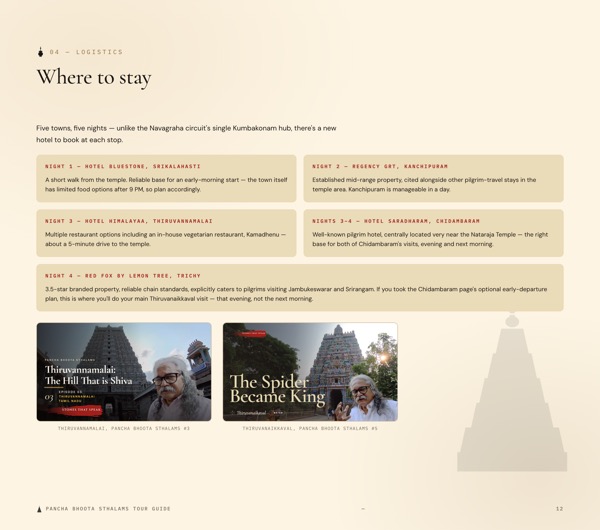
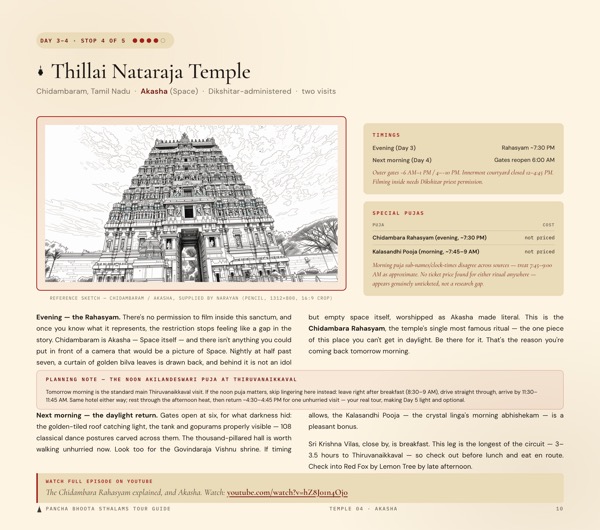
Day-by-day itinerary
A practical 5-day plan across two states — one temple, one town, one day each.
Timings & special pujas
Opening hours and puja details for all five temples, honestly flagged wherever sources disagree.
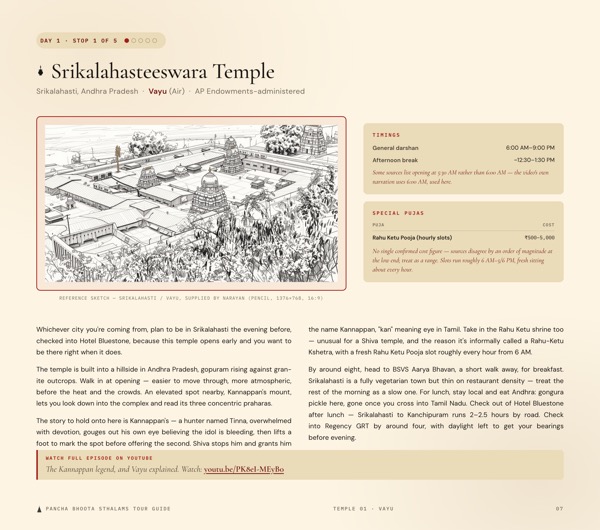
Hand-drawn sketches
A pencil sketch of each temple, one per stop on the circuit.
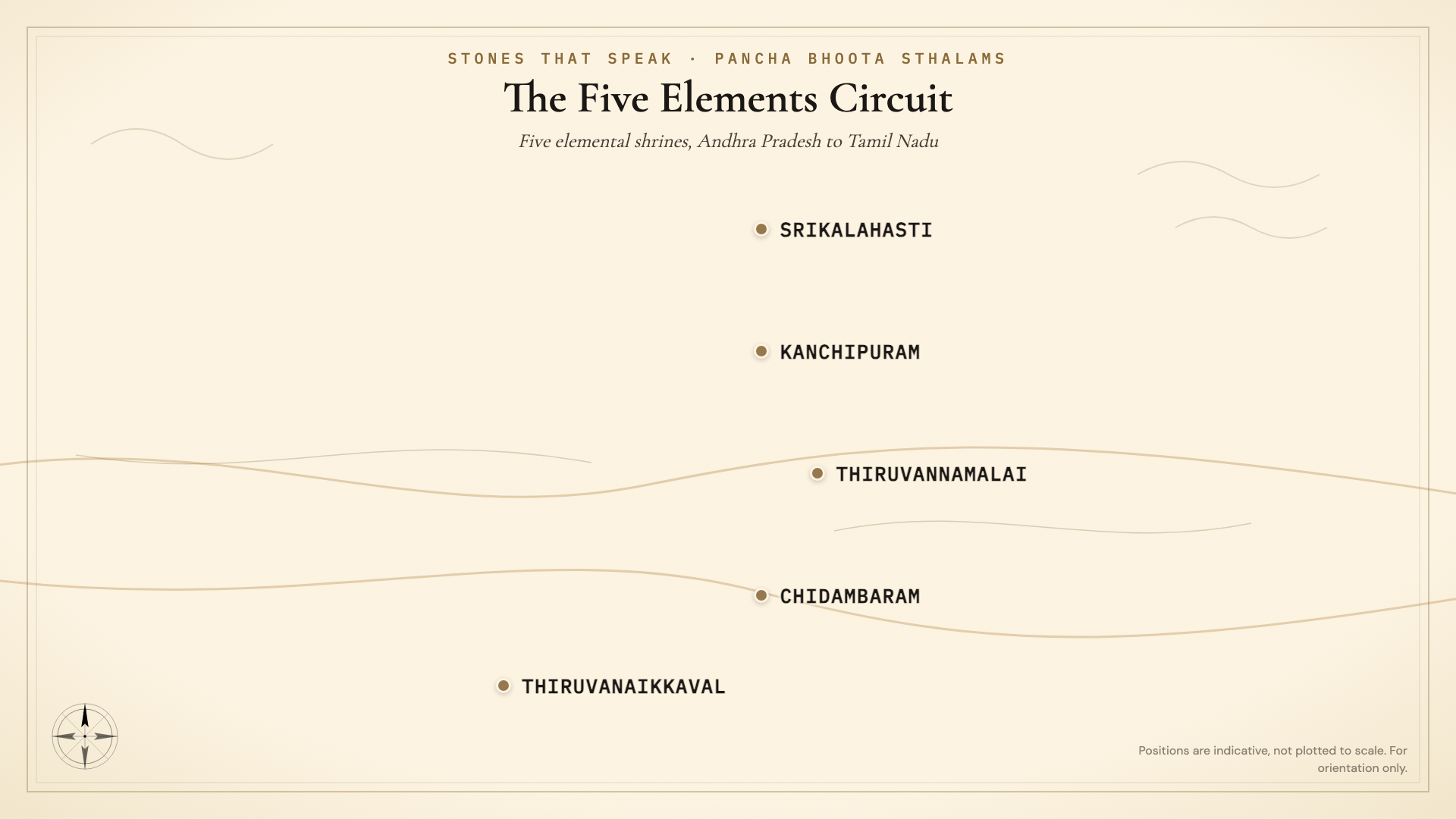
Master map & the longitude twist
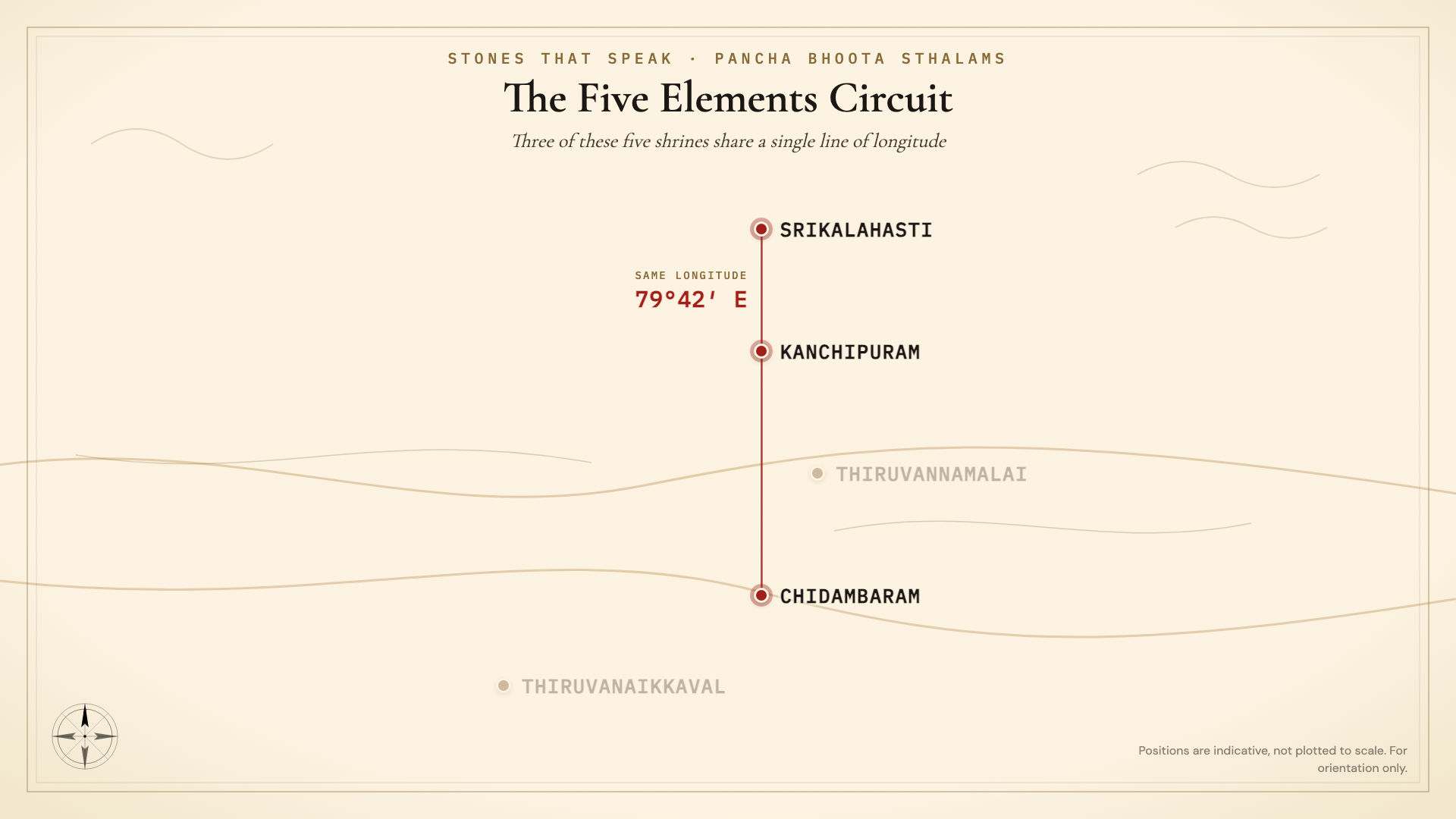
One route map for the whole circuit, plus the strange near-exact alignment three of the five temples share.
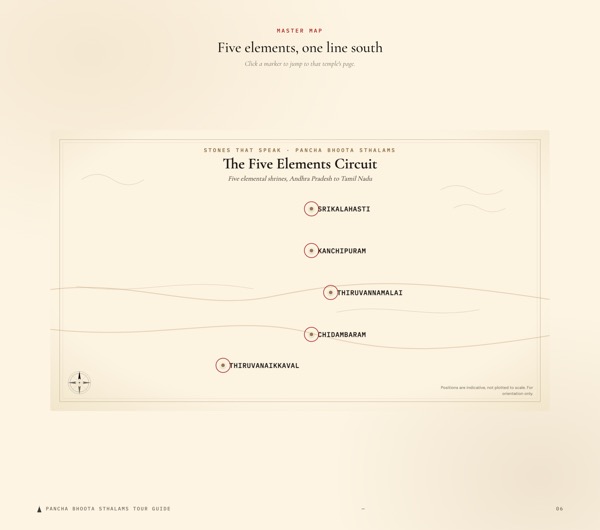
Master MapFive elements, one line south
Five ancient Shiva temples, each one a different element, spread across Andhra Pradesh and Tamil Nadu — no backtracking, every leg carries you further south. This is the actual overview map from inside the guide.
 About This Circuit
Five elements. Five temples. One map, still legible in stone.
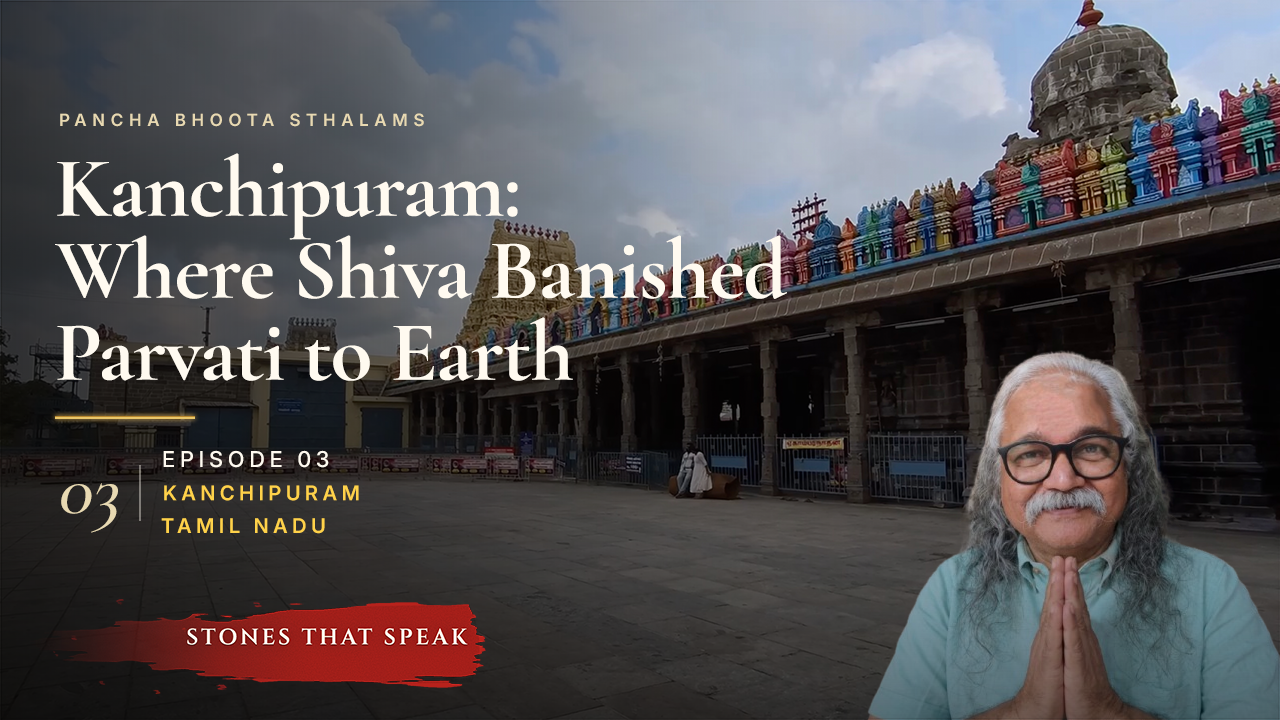
At Srikalahasti, Shiva is Vayu — Air, the invisible force behind every breath. At Kanchipuram, Shiva is Prithvi — Earth, embodied in a linga Parvati herself is said to have shaped from the ground during her own penance here.
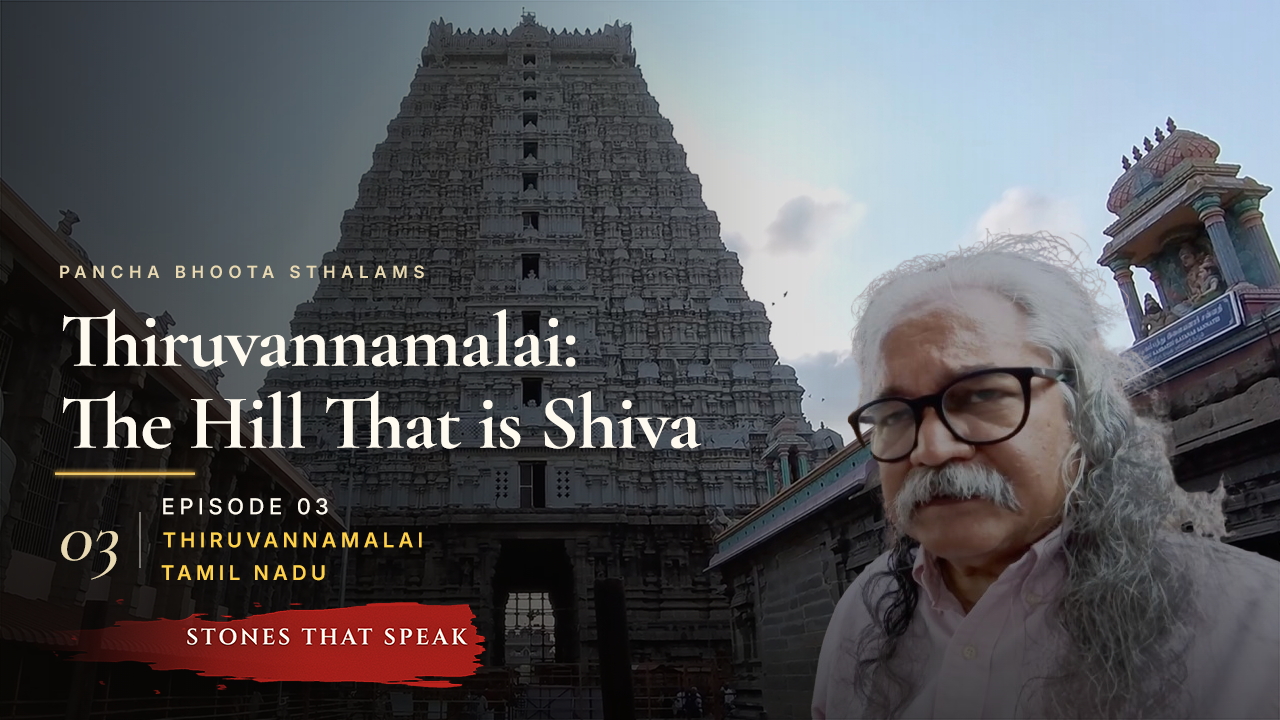
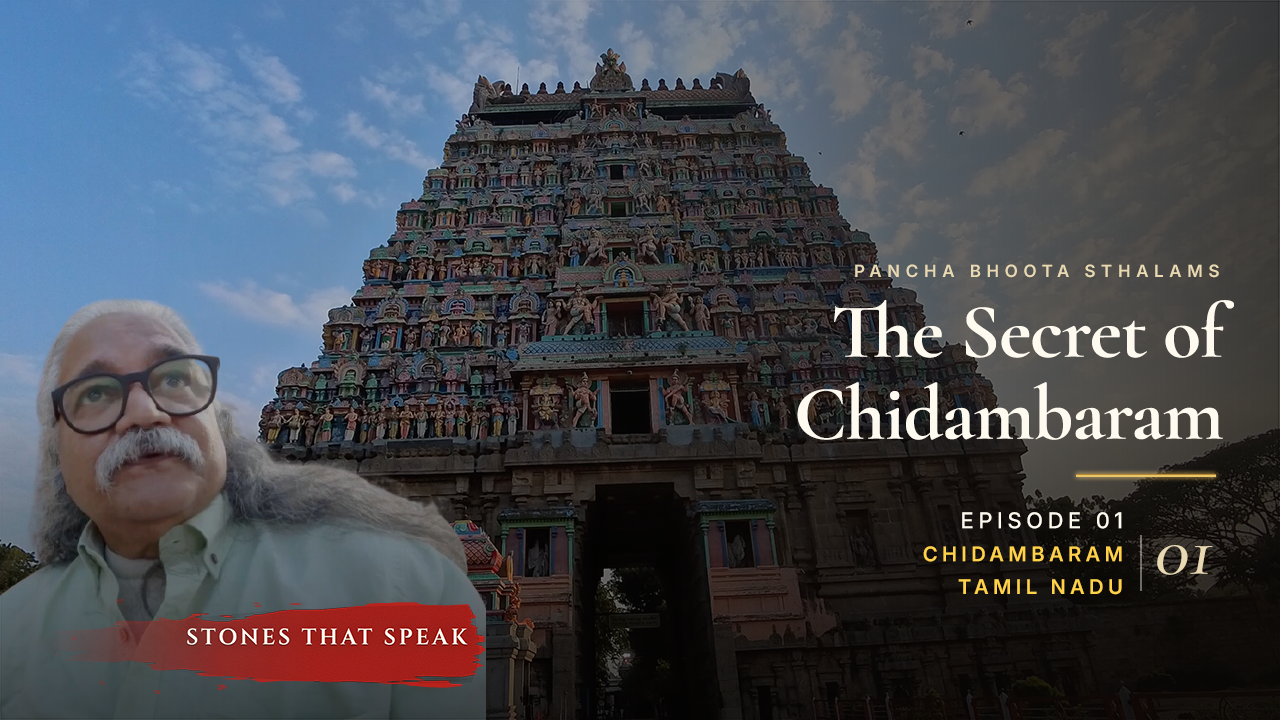
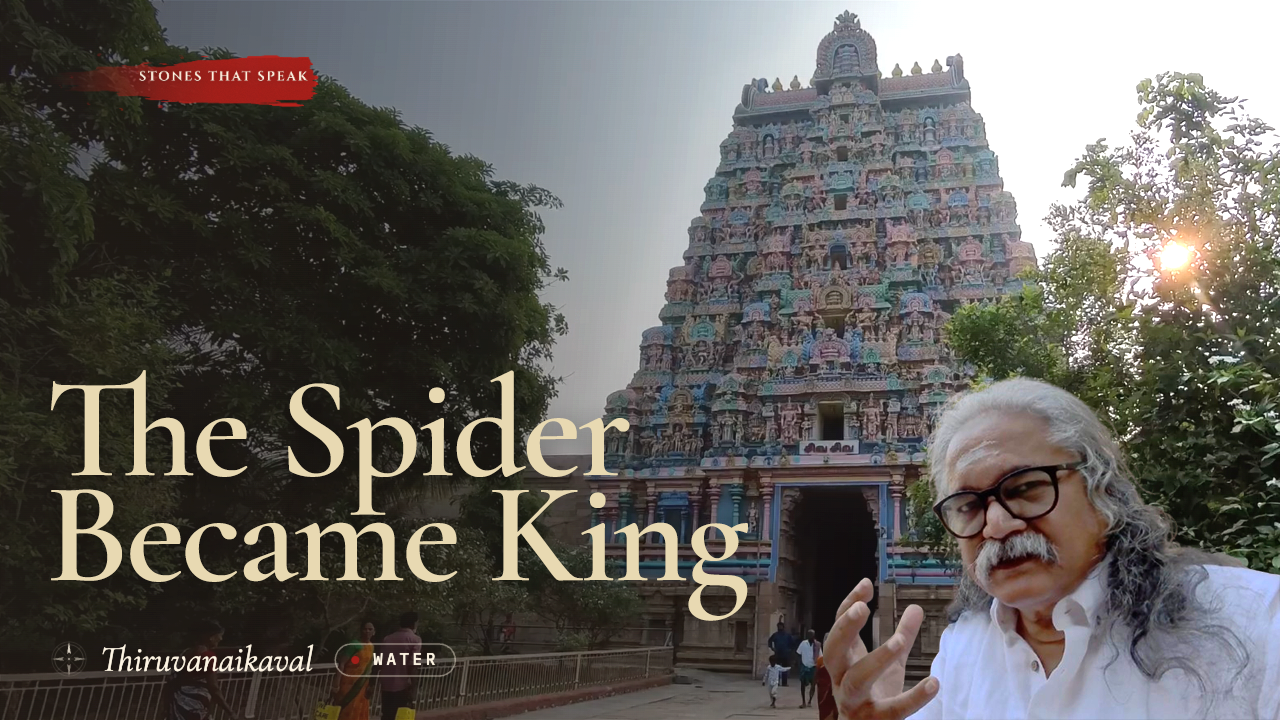
At Thiruvannamalai, Shiva is Agni — not a lamp or a ritual flame, but the sacred hill of Arunachala itself, visible from forty kilometres away. At Chidambaram, Shiva is Akasha — Space, the most abstract and formless of the five, and the subject of one of the great theological riddles of South Indian religion. At Thiruvanaikkaval, Shiva is Appu — Water, drawn from a natural spring that flows through the sanctum itself.
This deliberate distribution of elemental identity across five geographically separate sites is unique in the Hindu temple tradition. There is nothing else quite like it anywhere.
 Explore the Navagraha Guide